THEY TOLD ME TO HIDE AT MY SON’S BIRTHDAY
Chapter 2 – TWELVE YEARS OF SILENCE
The funny thing about silence is that people fill it with whatever story makes them most comfortable.
Ethan’s family had filled mine with mediocrity.
I let them.
For years, I told myself that was strength.
Sometimes it was.
Sometimes silence is discipline.
Sometimes it is restraint.
Sometimes it keeps classified work classified and private things private.
But sometimes silence becomes permission.
I understood that distinction too late.
I met Ethan twelve years earlier at a charity event in Washington.
I hadn’t wanted to go.
One of my closest friends had bought a table and threatened to drag me there personally if I skipped another event because of work.
I arrived late.
I wore a black dress I’d owned for three years.
Ethan found me near the back of the room studying the exits out of habit.
“Planning an escape?”
I looked at him.
He had an easy smile then.
Not the polished one he used with investors.
A real one.
“Considering it.”
“Good. I need a partner.”
That was our first conversation.
He made me laugh.
He asked questions.
Not enough, I later realized, but in the beginning they felt like enough.
He knew I was in the Army.
I told him that much.
When we became serious, he knew my career involved sensitive assignments.
He knew there would be things I could not discuss.
He said he respected that.
I believed him.
Margaret met me four months later.
She looked me over before she smiled.
Not cruelly.
Not obviously.
People like Margaret rarely insulted you in ways you could quote without sounding oversensitive.
She preferred suggestion.
Comparison.
Concern.
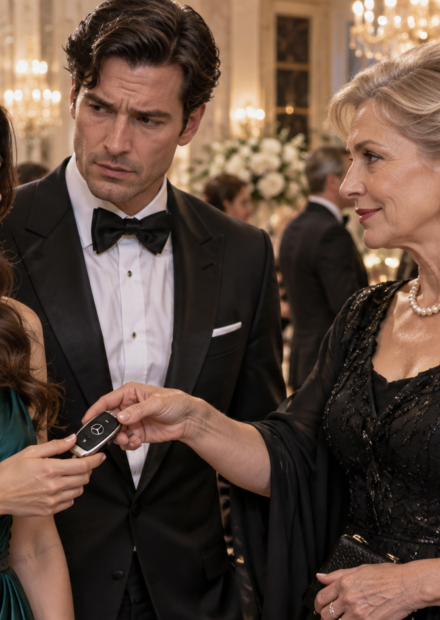
“So disciplined,” she said when she learned I was military. “I suppose that’s useful if you don’t have much family structure growing up.”
I had plenty of family structure.
We just hadn’t owned horses.
At dinner, she asked which finishing school I had attended.
I thought she was joking.
She wasn’t.
When I said none, she smiled.
“Of course.”
Ethan squeezed my knee beneath the table.
I mistook that for defending me.
It wasn’t.
It was asking me not to react.
There is a difference.
I learned that difference slowly too.
We married eighteen months later.
The ceremony was small by Whitmore standards and enormous by mine.
Margaret took control of almost everything.
She changed the flowers.
Changed the seating.
Changed the cake.
Tried to change my dress until I told her no with enough force that even she understood.
Ethan laughed afterward.
“You terrified her.”
“Good.”
He kissed me.
“Don’t ever change.”
I remembered that sentence for years.
Don’t ever change.
What he actually meant, I eventually understood, was:
Don’t ever make me choose.
At first, the insults were small.
Margaret recommended stores.
Then stylists.
Then etiquette consultants disguised as social invitations.
Richard introduced me to someone at a reception by saying, “Claire does paperwork for the government.”
I looked at Ethan.
He was holding a drink.
He heard it.
He smiled awkwardly.
I said nothing.
I was a lieutenant colonel at the time.
Two weeks earlier, I had been briefing people with responsibilities Richard would have treated with breathless respect if he had known their titles.
But at that party, I let him call me paperwork.
Why?
Partly because correcting him would have required explaining things I did not want to explain.
Partly because rank had never meant what the Whitmores thought status meant.
And partly because I loved Ethan.
That is the answer I dislike most.
Love can be generous.
It can also be an excellent excuse for self-erasure.
When Noah was born, things changed.
For a while, they genuinely changed.
Ethan was a wonderful father.
That made everything harder.
He woke for feedings.
He walked the halls with Noah against his chest.
When I returned to duty after maternity leave, Ethan sent me photos almost hourly.
He never made me feel guilty for my work.
Not then.
He loved our son with a tenderness that made me love him more.
And Margaret adored Noah.
I believed becoming a grandmother might soften her.
It did.
Toward him.
Not toward me.
She criticized the daycare I chose.
The pediatrician.
The clothes.
The preschool.
If Noah had a scraped knee, she wondered whether I traveled too much.
If he said please and thank you, she praised Ethan’s influence.
When I deployed, she referred to it as “one of Claire’s trips.”
When I came home, she asked whether I had finally considered a quieter career.
Ethan would say, “Mom, leave it.”
But always gently.
Always after the insult.
Never before the next one.
Then his company almost collapsed.
That was five years before Noah’s seventh birthday.
I came home one night and found Ethan sitting alone in the dark.
He had a stack of documents on the table.
“What happened?”
He looked up.
I had seen fear before.
Real fear.
The kind that comes when people understand their next decision may decide whether someone comes home.
Ethan’s fear that night was different.
It was the fear of a man whose entire identity had been built around never failing.
“The bank accelerated the loan.”
I sat across from him.
“On the development?”
He nodded.
“And the house is cross-collateralized.”
I went very still.
“How long?”
“Maybe three weeks.”
“Does your father know?”
His laugh was ugly.
“Yes.”
“And?”
“He said if he rescues me, I’ll never learn.”
I watched my husband stare at the table.
For the first time since I had known him, he looked small.
Not weak.
Small.
As if someone had taken the room he thought he occupied and reduced it around him.
“I can fix it,” he said.
I asked, “How?”
“I don’t know yet.”
He slept for two hours that night.
I never slept at all.
The next morning, I called Howard.
Over the following weeks, we worked quietly.
I had money Ethan did not fully understand.
Not secret fortune money.
Not inheritance.
Nothing theatrical.
Years of savings.
Investments.
Income.
Careful planning.
And access to financing Ethan had never thought to ask about because he assumed my government salary defined the outer boundary of my financial life.
It didn’t.
Howard structured the rescue through a holding company.
I refused to simply hand Ethan cash.
Not because I wanted control.
Because his company was unstable, creditors were circling, and giving money directly to the problem would have been irresponsible.
We protected the home.
Restructured what could be restructured.
The company survived.
Ethan came home one afternoon with tears in his eyes.
“Howard found a private group willing to take over the house debt.”
I remember washing strawberries at the sink.
“That’s good.”
“I don’t understand why they’d do it.”
“Maybe they think the underlying asset is solid.”
He laughed with relief.
“You’re starting to sound like me.”
I smiled.
He huggedged me from behind.
“You have no idea how scared I was.”
Actually, I did.
But I only said, “I know.”
That should have been the moment I told him.
Maybe.
I asked myself that many times after the birthday.
But trust is not a single door someone leaves locked.
It is a house built out of thousands of smaller choices.
By then, Ethan had already spent years accepting a version of me that required very little curiosity.
I told myself it was easier.
I told myself that protecting his pride mattered more than receiving credit.
I told myself marriage wasn’t a scoreboard.
All of those things were true.
None of them were the whole truth.
The whole truth was that I had become afraid of what would happen if the balance changed.
Ethan was comfortable when he believed he was the impressive one.
The Whitmores were comfortable when they believed I had married upward.
I had allowed that comfort to become the architecture of my marriage.
And then, at 2:07 one morning, Ethan used it against me.
My aide was reviewing the morning briefing schedule when she glanced up from her tablet.
“Ma’am?”
I realized I had been staring out the vehicle window.
“I’m listening.”
She hesitated.
“Do you want me to move your afternoon call?”
“No.”
“Understood.”
She returned to her notes.
She didn’t ask what had happened at my house.
Professional discretion.
A quality I suddenly appreciated more than ever.
My briefing lasted hours.
Maps.
Timelines.
Personnel.
Risks.
Decisions.
Real things.
Things with consequences.
I slipped into the version of myself that knew how to separate emotion from responsibility.
It had saved me more times than I could count.
But at 1:23 that afternoon, during a short break, I checked my phone.
Twenty-seven messages.
Six from Ethan.
Three from Margaret.
Two from Richard.
Several from numbers I didn’t recognize.
One from Howard.
And one from Noah, sent from Ethan’s phone.
It was a photograph.
His telescope box.
He was grinning beside it.
Underneath, he had typed with seven-year-old spelling:
THANK YOU MOM IT CAN SEE THE MOON
I smiled.
Then I opened Ethan’s first message.
We need to talk.
The second:
I can’t believe you never told me.
Third:
People are asking questions.
Fourth:
Mom is humiliated.
I stopped.
Read that one again.
Mom is humiliated.
Not:
I am sorry.
Not:
I can’t believe I asked you to hide.
Not:
Noah was looking for you and I lied to him.
Mom is humiliated.
I locked my phone.
For a few seconds, I simply stood there in the hallway outside the briefing room.
Then a memory came back to me.
Thanksgiving.
Three years earlier.
Margaret had looked at the navy dress I wore and smiled.
“Claire, that’s surprisingly nice. Supermarket?”
Everyone had laughed.
Including Ethan.
Not loudly.
Just enough.
I had smiled too.
That was the part that hurt now.
I had trained them how to treat me.
Not because their choices were my fault.
They owned those.
But every time I swallowed an insult to keep dinner pleasant, I taught them there would be no cost.
Every time Ethan failed to defend me and I told him it didn’t matter, I made it easier for him to believe it didn’t.
Now there would be a cost.
Not revenge.
Consequences.
There is a difference.
I opened Howard’s message.
Everything is ready when you are. I did not disclose anything after you left. Ethan asked. I told him to speak to you.
I replied:
6 p.m. At the house. Private.
Then I added:
No discussion in front of Noah.
Howard answered immediately.
Understood.
I went back into the briefing.
For the next four hours, I did my job.
When I left, the sky over Virginia was turning the color of steel.
And for the first time all day, I allowed myself to think about what waited at home.
Not the property.
Not the money.
Not Margaret.
Ethan.
My husband.
The man I had loved for twelve years.
The man who had held our newborn son against his chest and cried.
The man who had once told me never to change.
The man who, at 2:07 a.m., had asked me to disappear.
I wondered which version of him would be waiting.
Then I realized that was no longer the most important question.
The most important question was which version of me would walk through the door.