Chapter 1 – THE MORNING I SAID NO
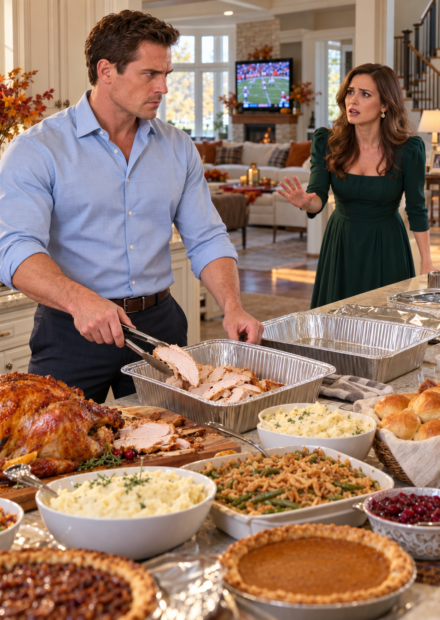
My daughter-in-law had been living in my house for less than fifteen hours when she informed me that I would be taking care of her children the next morning.
She did not ask.
That was the part I kept returning to afterward.
Brooke did not smile, soften her voice, or offer the slightest performance of needing a favor. She sat at my breakfast table in a pale gray sweater that probably cost more than the coat I had owned for twelve years, stirred two packets of raw sugar into the coffee I had made for her, and said, “We’re sleeping in tomorrow. You’ll handle the kids.”
I was sixty-eight years old.
I had been a widow for five years.
And she was sitting at the oak table Richard and I had bought almost thirty years earlier, speaking to me as though she were assigning a shift to an employee.
I looked at her.
Then I said one word.
“No.”
Brooke laughed.
Not because anything was funny.
She genuinely thought I was joking.
Across the kitchen, my son Julian stopped halfway through opening the refrigerator.
At forty-one, he still had the same tell he had possessed as a boy. Whenever he knew trouble was coming and hoped someone else would stop it, his shoulders tightened first.
I watched them tighten.
Brooke waited for me to smile.
I did not.
Her spoon made one final circle inside the mug.
“What do you mean, no?”
“I mean I won’t be taking care of the children tomorrow morning.”
She stared at me.
Julian slowly closed the refrigerator.
“Mom—”
Brooke lifted a hand at him.
“We have had the worst week imaginable,” she said. “We moved everything we own. The closing got delayed. The rental fell through. The kids are exhausted. We’re exhausted.”
“I know.”
“And we just need one morning.”
“I understand.”
Her mouth tightened.
Then came the sentence that changed the entire conversation.
“You can’t watch your own grandchildren for a few hours?”
There it was.
A request transformed into a moral test.
Ten seconds earlier, the question had been whether I wanted to give up my morning.
Now my refusal was evidence that something was wrong with me.
I had known Brooke for eleven years. I knew the different versions of her voice.
There was the bright voice she used around people she wanted to impress.
The efficient voice she used with contractors, restaurant hosts, teachers, and hotel clerks.
The clipped voice she used when Julian irritated her.
And then there was this one.
The voice that said she had already decided what a reasonable person would do, and my only role was to comply.
“No,” I repeated. “I can’t.”
Her eyebrows lifted.
“Can’t?”
“Won’t, if you prefer.”
That landed.
Julian shut his eyes for half a second.
Brooke leaned back in her chair.
“You’re unbelievably selfish.”
For a moment, nobody moved.
The refrigerator hummed behind Julian.
The Christmas lights in the adjoining living room blinked red, then gold, then red again.
Even Brooke seemed to realize she had said more than the room could comfortably hold.
Julian looked shocked.
I waited for him to say something.
He did.
Just not what I had hoped.
“Mom, she’s just tired.”
Brooke turned toward him immediately.
“Don’t make excuses for me. I meant it.”
I looked at my son.
He rubbed the back of his neck.
That gesture had carried us through a decade of uncomfortable meals, altered reservations, changed holiday plans, and last-minute demands.
Mom, you know how she is.
Mom, can we just do it this way?
Mom, I don’t want to make this into a thing.
The words changed, but the meaning never did.
Please make yourself smaller so I don’t have to make my wife uncomfortable.
And the worst part was that I had taught him it worked.
I had changed dinner reservations because Brooke disliked the restaurant I chose.
I had rearranged Christmas around her parents’ plans.
I had babysat when Julian was already driving toward my house.
I had mailed school shoes Lily left behind after a weekend visit.
I had paid emergency dental bills, activity fees, car repairs, and more than one “temporary” expense that quietly became permanent.
I did those things because I loved my son.
Because I adored Lily and Mason.
Because I had the money.
Because helping felt easier than making them struggle.
Because after Richard died, doing things for Julian gave me somewhere to put a portion of the love that had suddenly lost its daily destination.
But somewhere along the way, my generosity had stopped being recognized as generosity.
It had become infrastructure.
Something expected to be there.
Like electricity.
Running water.
A grandmother.
I folded my hands on the table.
“Julian, do you agree with her?”
His eyes met mine.
Then moved away.
“Mom, I don’t think this needs to turn into some huge argument.”
“That wasn’t what I asked.”
Brooke made an irritated sound.
“For God’s sake.”
I kept looking at my son.
He sighed.
“I think we’re all tired.”
Again, not an answer.
And yet, somehow, it answered everything.
I stood.
Brooke’s gaze followed me.
“You will take care of your own children tomorrow morning,” I said. “And every morning after that while you’re staying here.”
Her face went still.
“You are guests in my house. You are not employers.”
Julian whispered, “Mom.”
I looked at him.
“You arrived without calling. I let you in. I made up beds. I ordered dinner. I gave you space in my home three days before Christmas. I am happy to help when I choose to help. But I will not be assigned duties in my own house.”
Brooke’s cheeks flushed.
“I cannot believe you’re making this into such a big deal.”
“I’m not.”
“You absolutely are.”
“No. I’m saying no. You are making my no into a character defect.”
She opened her mouth.
I picked up my coffee.
“I’m finished discussing it.”
Then I walked out.
My heart did not race.
That surprised me.
I had imagined, for years, that confrontation would feel like anger.
Instead, I felt almost unnaturally calm.
As though some argument inside me had finally stopped.
Their arrival the night before should have warned me.
Three days before Christmas, I had been sitting on the living-room rug wrapping gifts when headlights swept across the wall.
A vehicle hit the curb outside hard enough that I heard the tires scrape.
I looked through the window and saw Julian’s SUV.
It was packed to the roof.
Suitcases.
Cardboard boxes.
Plastic storage tubs.
Shopping bags.
Wrapped presents.
A disassembled artificial Christmas tree was strapped awkwardly against one side of the rear cargo area.
I stood in my doorway while Julian walked up the path wearing the guilty expression I remembered from his teenage years.
“We only need to stay a couple of weeks until the new house is ready.”
That was what he said.
Not, Can we stay?
Not, Would that be okay?
Not even, Mom, I’m sorry to show up like this.
A statement.
Behind him, Lily climbed out of the back seat.
Mason was asleep with his cheek against the window.
I stared at Julian.
“What happened?”
“The closing got pushed back.”
“And the rental?”
“Fell through.”
“When?”
He hesitated.
“Yesterday.”
“You didn’t think to call?”
“Mom, I know. I should have. Things were crazy.”
He turned toward the SUV before I had agreed to anything.
“Hotels are insane this close to Christmas.”
He opened the cargo hatch.
Then Brooke appeared from the passenger side carrying two glossy shopping bags with rope handles.
I recognized the name on one of them.
It was a store where I had once picked up a scarf, seen the price, and quietly put it back.
Brooke came up the walk.
“Elaine, thank God.”
She kissed the air near my cheek and stepped inside.
Not after I invited her.
Before.
I followed her into my own foyer.
Within ten minutes, the house looked as though a moving truck had overturned inside it.
Shoes appeared under the console table.
A suitcase blocked the hallway.
Mason woke up and began dragging a plastic bin toward the stairs.
Lily threw herself into my arms.
“Grandma!”
I hugged her tightly.
She smelled like peppermint gum and cold air.
“Can I put something on your tree?”
That was the end of whatever resistance I still possessed.
There were two children in my hallway three days before Christmas.
Of course I let them stay.
“Pick something unbreakable,” I told Lily.
Within thirty minutes, I was making beds.
Finding clean towels.
Clearing drawers.
Moving fragile decorations beyond Mason’s reach.
Searching for the spare toothbrushes I kept in the upstairs cabinet.
Brooke walked through the house deciding where their belongings should go.
Then she tossed her cream wool coat across Richard’s desk.
I stopped.
“Brooke.”
She looked at me.
“Would you move your coat, please?”
She glanced down.
Richard’s desk was antique mahogany, dark and scarred along the front edge where he used to tap his wedding ring while thinking.
It was the one piece of furniture I had kept almost exactly as he left it.
His brass letter opener remained in the right-hand drawer.
His old fountain pen sat in a wooden tray.
Every Christmas Eve, Richard had sat there after everyone went to bed and written charity checks.
He never announced them.
He hated public generosity.
“If you need an audience,” he once told me, “you’re buying applause, not helping.”
Five years after his death, I still polished that desk myself.
“Oh.”
Brooke lifted the coat.
“Sorry.”
There was no weight behind the word.
Julian came through the front door carrying another suitcase and saw my expression.
Then came the shrug.
Small.
Helpless.
Familiar.
You know how she is.
I knew.
The question I had never properly asked was why that meant I was always the one expected to adjust.
I ordered dinner because everyone was tired.
Brooke said Thai was fine.
Then complained the food was too spicy.
By nine thirty, Mason was crying from exhaustion.
Lily could not find her stuffed rabbit.
Julian was searching through boxes.
Brooke was snapping at everyone.
I found the rabbit beneath a suitcase, carried Mason upstairs, helped Lily hang a felt snowman ornament on my tree, and finally went to bed after eleven.
The next morning, Brooke assigned me childcare duty.
Then called me selfish when I refused.
After I left the kitchen, I expected someone to follow me.
Nobody did.
For the rest of the morning, I did something I had almost forgotten how to do.
Nothing.
I did not fix the atmosphere.
I did not apologize.
I did not offer to take Lily shopping.
I did not suggest a movie for Mason.
I did not pull Julian aside and tell him I understood Brooke was stressed.
I got dressed.
Put on my red wool coat.
Picked up my purse.
And drove alone to the Christmas market downtown.
The day was bright and bitterly cold.
A brass quartet played carols near the fountain.
Children stood in line for hot chocolate.
There were stalls selling honey, candles, ornaments, knitted scarves, and jars of preserves tied with red ribbon.
For almost an hour, I simply walked.
Nobody needed me.
Nobody was disappointed in me.
Nobody was waiting for me to solve something.
At a stall filled with hand-painted glass ornaments, I picked up a small white house painted with evergreen branches along the roof.
Richard would have liked it.
The thought came with the familiar ache.
Then, for no obvious reason, another thought followed it.
How much money was I still spending on Julian every month?
I stood there holding the ornament.
At first, I nearly dismissed the question.
I knew I paid for a few things.
The gas card.
The family phone plan.
Roadside assistance.
But then another item surfaced.
Cloud storage.
Then streaming services.
Then the warehouse membership.
Grocery delivery.
A vehicle service package I had agreed to cover “for six months” after Mason was born.
Mason was five.
I slowly returned the ornament to its hook.
That evening, the house went quiet around ten.
Brooke and Julian went upstairs.
The children were asleep.
I made tea and sat at Richard’s desk.
I opened my laptop.
Then I logged into my bank account.
I started with a yellow legal pad.
At the top, I wrote JULIAN.
Underneath, I listed every payment I could remember.
Then I searched.
Phone plan.
Gas card.
Streaming.
Insurance-related roadside package.
Warehouse membership.
Grocery delivery.
Music subscription.
Cloud storage.
Vehicle maintenance.
One by one.
Some were monthly.
Some annual.
Some quarterly.
Each one looked harmless alone.
Thirty dollars.
Fifteen.
Sixty-eight.
Forty.
Ninety.
Twenty-two.
Then there was the gas card.
That one made me sit back.
I had given Julian access years earlier when he was commuting two hours for a job transition.
I had never canceled it.
There were charges every month.
Not enormous.
Just steady.
Dependable.
Mine.
I added everything.
Then added it again because the number bothered me enough that I assumed I had made a mistake.
I had not.
I was quietly subsidizing hundreds of dollars of their household expenses every month.
Month after month.
Year after year.
And that total did not include birthdays.
School fundraisers.
Car repairs.
Children’s activities.
The check I had sent three months earlier because Julian said moving expenses had “gotten away from them.”
Or the Christmas presents stacked beneath my tree.
I stared at the paper.
Then I looked toward the cream-colored shopping bag Brooke had left near the stairs.
A store expensive enough that I had put back a scarf.
I did not resent her for buying things.
That was not the point.
The point was that somewhere in our family, money had lost its labels.
Their purchases were choices.
My contributions were expected.
And my time, apparently, belonged in the same category.
I remembered my mother.
Richard and I had been in our thirties when we hired the wrong contractor to repair a portion of our roof.
The man disappeared halfway through the job with most of our deposit.
We needed help.
My mother loaned us the money.
I had been ashamed.
She sat at my kitchen table and told me, “There is no shame in needing help, Elaine. There is shame in forgetting it was help.”
I had never forgotten.
Richard and I paid her back in eleven months.
But Julian—
I looked down at the list.
Julian was forty-one years old.
He had a wife.
Two children.
A new house.
And no idea what his own life actually cost.
I sat at Richard’s desk until nearly midnight.
The house was silent.
My tea went cold beside me.
Brooke had called me selfish because I refused to give her one morning.
But the problem was no longer one morning.
It had not been one morning for a very long time.
I turned the legal pad over.
On the clean side, I wrote three words.
THIS ENDS NOW.