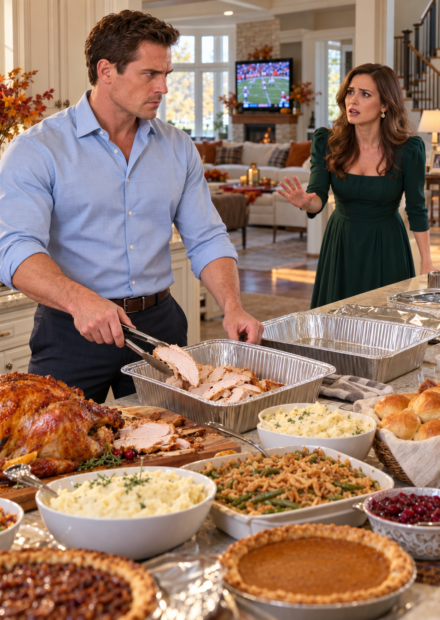
My Daughter-In-Law Invited Fourteen Relatives To My House And Ordered Me To Cook
Chapter 5 – THE KEY
“Do you want this back?”
Harper held my front-door key between two fingers.
The house behind her looked strange.
Lighter.
Not better exactly.
Not yet.
Just emptied of tension I had grown so used to carrying that I had forgotten it had weight.
Liam was outside securing a box in the back of his car.
The moving truck had already left for their apartment.
Harper and I stood in the entryway where four months earlier she had arrived with three suitcases and hugged me for saving them.
I looked at the key in her hand.
“Yes.”
Her mouth tightened.
For one dangerous second, I thought we were about to lose every inch of ground we had gained.
Then she placed the key in my palm.
“There.”
“Thank you.”
She glanced toward the small table beside the door.
Daniel’s photograph sat exactly where it had always belonged.
Harper noticed.
“I shouldn’t have moved that.”
“No.”
“I thought I was helping.”
“I know.”
She looked at me.
“That doesn’t make it better.”
“No.”
She nodded.
Outside, Liam closed the trunk.
Harper took a breath.
“I told my mother the truth.”
I raised my eyebrows.
“About dinner?”
“About all of it.”
“That must have been fun.”
She almost laughed.
“It wasn’t.”
“I’m sure.”
“She said I sounded like my father.”
The pain in her face appeared immediately.
I did not know enough about her father to comment.
So I didn’t.
Harper continued.
“I hated that.”
“I imagine.”
“She said that when he wanted something, he’d make everyone feel selfish for saying no.”
Her gaze dropped.
“I didn’t know she thought that about him.”
“Maybe she didn’t want you to.”
“Maybe.”
Liam came through the open door.
“Ready?”
Harper nodded.
Then she looked around.
Her eyes moved over the staircase, the living room, the kitchen beyond it.
“I did like it here.”
There was something almost childlike in the admission.
“I know.”
“I think that was part of the problem.”
“Yes.”
She looked at me.
“Still no apology?”
I smiled faintly.
“For asking you to leave?”
“Yes.”
“No.”
She rolled her eyes.
But there was no venom in it.
“Worth a try.”
Liam picked up the final bag.
He looked nervous.
“Mom.”
“Yes?”
He set the bag down again and hugged me.
Hard.
For several seconds, I was surprised.
Then I held him.
My son was thirty-two years old.
But when he wrapped his arms around me, I remembered scraped knees.
Soccer cleats abandoned by the front door.
College applications spread across the dining table.
Daniel teaching him how to drive.
All the years before Harper.
All the years that would exist after this argument.
Love did not vanish because people disappointed each other.
But love could not survive honestly if disappointment was never allowed to have consequences.
“I’m sorry,” he whispered.
I closed my eyes.
“I know.”
“For all of it.”
“I know.”
“I should have listened sooner.”
“Yes.”
He pulled back and laughed through wet eyes.
“Could you let me off the hook once?”
“No.”
That made Harper laugh.
Actually laugh.
The sound startled all three of us.
For a moment, the house felt normal.
Not the old normal.
Something more careful.
Maybe more honest.
Liam lifted the bag again.
“We’ll call you tonight.”
“You don’t have to.”
“I know.”
He smiled.
“We will.”
They walked outside.
I stood in the doorway as they climbed into separate cars.
Harper backed out first.
At the end of the driveway, she stopped.
For a second, I wondered whether something was wrong.
Then her window rolled down.
She lifted one hand.
I waved.
She drove away.
Liam followed.
And then I was alone.
The silence afterward was enormous.
I closed the door.
Locked it.
Rested my forehead against the wood.
And cried.
Not because I regretted anything.
That surprised me.
I cried because doing the right thing had still hurt.
There had been a part of me—small, stubborn, maternal—that kept believing I could find a solution in which everyone was comfortable.
A sentence gentle enough that Harper would understand without feeling rejected.
A conversation perfect enough that Liam would grow a backbone without experiencing pain.
A boundary soft enough that nobody would call it one.
That solution did not exist.
Sometimes saying no meant someone got angry.
Sometimes protecting a relationship meant letting it survive an honest conflict instead of preserving a dishonest peace.
Sometimes loving your son meant refusing to rescue him from every consequence of the life he had chosen.
I cried for maybe five minutes.
Then I washed my face.
And started putting my house back together.
Not because Harper had destroyed it.
She hadn’t.
That would have made the story simpler than it was.
She had moved things.
So had I.
I returned the mugs to their original cabinet.
Then I paused.
Harper had been right about one thing.
The cabinet beside the coffee machine was a ridiculous place for them.
I laughed out loud.
I moved half of them back to where she had put them.
I returned the pantry shelves to something close to their old arrangement but kept the clear containers Harper had bought.
I hated to admit it.
They were useful.
Upstairs, I stripped the guest bed.
I opened the windows.
Fresh September air moved through the room.
In the closet, I found one of Harper’s blouses.
I folded it and set it aside.
On the dresser sat a little ceramic dish she used for earrings.
She had forgotten that too.
I placed the blouse beside it.
For the first time, those objects did not feel like an invasion.
They were simply things belonging to someone who had lived in my house and no longer did.
That evening, Liam called.
The apartment move had been a disaster.
The sofa barely fit through the stairwell.
Harper hated the kitchen cabinets.
One box of glasses had broken.
But they were in.
“Do you have food?” I asked.
There was a pause.
Then Liam laughed.
“Mom.”
“What?”
“You’re not going to ask where dinner is?”
I smiled.
“Absolutely not.”
In the background, I heard Harper say, “Tell her we ordered pizza.”
“Again?”
“That’s what I said.”
We all laughed.
It was awkward.
But it was laughter.
Over the next three weeks, things settled.
Liam called less often than I expected.
At first that hurt.
Then I realized maybe it was healthy.
They were figuring out their life without my kitchen becoming the battlefield.
When we spoke, he told me small things.
They bought a secondhand dining table.
Harper had found curtains she liked.
They were making a budget.
That last one made me smile.
“How’s that going?”
“Terribly.”
“I assumed.”
“Harper says I make spreadsheets look judgmental.”
“That sounds like you.”
“Thanks.”
He grew quiet.
Then he said, “We’re seeing someone.”
I knew what he meant.
“A counselor?”
“Yeah.”
“How do you feel about that?”
“Uncomfortable.”
“Good.”
He laughed.
“Very supportive.”
“You know what I mean.”
“I do.”
I did not ask what they discussed.
That mattered.
Their marriage belonged to them.
My house belonged to me.
The distinction was beginning to feel peaceful instead of defensive.
Two weeks later, Denise invited me to lunch.
Just the two of us.
I almost declined.
Then I decided avoiding her would turn everything into a larger feud than it needed to be.
We met at a small café halfway between our homes.
She arrived first.
When I sat down, she smiled.
“Thank you for coming.”
“Of course.”
After we ordered, she folded her hands.
“I owe you an apology.”
I shook my head.
“Denise—”
“No. Let me.”
So I did.
“I knew Harper could be…forceful.”
I smiled.
“That’s one word.”
She smiled too.
“I kept telling myself she’d grow out of it. Then I told myself marriage would teach her compromise.”
“Poor Liam.”
She laughed despite herself.
“Exactly.”
Then she became serious.
“When she called me after the dinner, my first instinct was to call you and tell you to be more understanding.”
“I guessed.”
“I almost did.”
“What stopped you?”
She looked embarrassed.
“The dinner.”
I waited.
“She had already lied about who invited us.”
That was the clue.
The first crack in the story Harper wanted everyone to accept.
Denise continued.
“I kept thinking, if Chelsea was cruel for no reason, why would Harper need to lie before anything happened?”
I nodded slowly.
“She knew I might say no.”
“Yes.”
Denise traced the edge of her water glass.
“I’ve spent years fixing things for her because it was easier than letting her be upset.”
I almost laughed at the familiarity.
“So have I.”
“For four months.”
“Apparently I’m a fast learner.”
She smiled.
Then sighed.
“Maybe Liam is too.”
“I hope so.”
“And Harper?”
I considered the question.
“I think Harper learns when consequences last longer than arguments.”
Denise looked at me.
“That sounds right.”
When lunch ended, she hugged me.
Before walking away, she said, “Next time there’s a family dinner, I’ll call you myself.”
I laughed.
“Please do.”
The next family dinner came in November.
Harper invited me.
That detail mattered.
She called on a Tuesday.
“Are you busy Saturday?”
“Depends.”
“We’re having Mom, Brittany, and a few other people over.”
“At the apartment?”
“Yes.”
I smiled to myself.
“What time?”
“Six.”
“And what are you making?”
There was a long silence.
Then Harper started laughing.
I laughed too.
“I deserved that,” she said.
“You did.”
“We’re making lasagna.”
“We?”
Another pause.
“Liam is making lasagna.”
“That sounds more believable.”
“He’s standing here giving me a rude gesture.”
“I raised him better than that.”
“Debatable.”
The ease between us surprised me.
It was not intimacy.
We were not suddenly best friends.
Trust did not regrow because someone apologized once.
But resentment had stopped growing.
That was enough.
“I’d like you to come,” Harper said.
The joking tone had disappeared.
“Okay.”
“You don’t have to bring anything.”
I smiled.
“Thank you.”
“And I mean that.”
“I know.”
Saturday evening, I drove to their apartment carrying flowers.
Not food.
Harper opened the door.
She looked nervous.
I recognized the apartment from the listing.
It was smaller than my house.
Much smaller.
The entry opened almost directly into the living room.
The kitchen counters were cheap laminate.
The dining table was obviously used.
The curtains were Harper’s.
Warm cream fabric that softened the windows.
She had placed photographs on the walls.
One from their wedding.
One of Liam with Daniel.
One of Harper with Denise and Brittany.
The apartment looked lived in.
Not perfect.
Theirs.
“It’s nice,” I said.
Harper studied my face.
“You don’t have to say that.”
“I know.”
“Do you mean it?”
“Yes.”
Her shoulders loosened.
Liam appeared from the kitchen wearing an apron.
“Mom.”
“You cook now?”
“Apparently.”
“He’s very brave with cheese,” Harper said.
“I taught him everything he knows.”
“You taught me grilled cheese.”
“It has cheese.”
Denise arrived ten minutes later.
Then Brittany.
Then three cousins.
Eight people total.
Every chair was used.
The table barely fit everyone.
Nobody cared.
At one point, Harper went into the kitchen for another bottle of wine.
I followed to help carry glasses.
She opened a cabinet, then glanced at me.
“You know what’s weird?”
“What?”
“I hate people touching my kitchen stuff now.”
I looked at her.
Her eyes narrowed.
“Do not.”
I smiled.
“I didn’t say anything.”
“You’re thinking it very loudly.”
“I might be.”
She handed me two glasses.
Then she leaned against the counter.
“I get it now.”
The words were quiet.
I stopped smiling.
She looked toward the dining room, where Liam and Denise were arguing cheerfully about some television show.
“This place is tiny,” Harper said. “But when people come over without asking…”
She made a face.
“It makes me crazy.”
“Imagine that.”
“Chelsea.”
“Sorry.”
“No, you aren’t.”
“No.”
She smiled.
Then looked down.
“I really am sorry.”
This apology felt different from the one in the guest room.
Maybe because she was no longer standing inside the thing she wanted from me.
She had her own space.
Her own kitchen.
Her own door.
Her own right to say no.
“I know,” I said.
She looked at me.
“And I’m sorry I let it go so long that I started hating you for things I had never clearly stopped.”
Her eyebrows rose.
“You hated me?”
“Some mornings.”
She laughed.
“Fair.”
“I should have been clearer sooner.”
“Probably.”
“That does not mean you were right.”
“I knew there was a catch.”
We smiled at each other.
Then Liam shouted from the dining room.
“Are you two talking about me?”
“Yes,” Harper and I said together.
He groaned.
For the first time in months, dinner felt uncomplicated.
Not perfect.
Real.
When I left that night, Harper walked me to the door.
“Text me when you get home.”
“I will.”
“And Chelsea?”
I turned.
She hesitated.
“Thank you for coming.”
“Thank you for inviting me.”
The word hung there.
Inviting.
Not informing.
Not assuming.
Inviting.
I drove home through cold November streets.
When I pulled into my driveway, the porch light glowed above the front door.
My front door.
For months, I had felt ashamed of that phrase.
My house.
Harper had made it sound selfish.
Liam’s silence had sometimes made it sound cruel.
But ownership was never really the point.
The point was consent.
A house was only the most visible place where we had lost it.
I unlocked the door and stepped inside.
The rooms were quiet.
Not lonely.
Quiet.
There was a difference.
I hung my coat in the closet.
Put my purse on the entry table.
Straightened Daniel’s photograph even though it was already straight.
Then I went into the kitchen.
I opened the cabinet beside the coffee machine.
Half my mugs were there.
Half were in Harper’s better location.
I laughed.
My phone buzzed.
A message from Liam.
Home?
I typed back.
Just walked in.
Three dots appeared.
Then another message.
Thanks for coming tonight. It meant a lot to us.
Us.
For once, the word did not mean me doing the work.
I smiled and set the phone down.
The wall clock above the pantry door ticked steadily.
The same clock that had measured the silence the night Harper demanded dinner.
I thought about that version of myself standing beside the counter with fourteen people watching.
I had believed the confrontation was about food.
Then I believed it was about my house.
Then I believed it was about Harper.
I had been wrong each time.
It was about the cost of a word I had been afraid to say.
No.
No, you cannot take my car without asking.
No, you cannot give someone access to my home.
No, you cannot volunteer my time.
No, you cannot move my belongings because you prefer them somewhere else.
No, you cannot decide that because I love you, everything I have belongs to you.
And maybe most importantly:
No, I will not call surrender peace anymore.
I filled the kettle.
While the water heated, I looked around my kitchen.
Nothing dramatic had happened to it.
No grand renovation.
No triumphant transformation.
It simply felt like mine again.
And because I had finally learned how to say no, I could invite people into it without fearing they would mistake kindness for permission.
I made tea.
Carried it into the living room.
Sat beneath the photograph of Daniel and Liam by the lake.
Outside, November wind moved through the bare branches.
Inside, my house was warm.
My son still loved me.
His wife did not hate me.
Their marriage was theirs to repair.
My life was mine to live.
There had been no winner.
There did not need to be.
There only needed to be a door each of us could open for the people we loved—and close when we needed to.
And a key we understood was never the same thing as ownership.